

Sanpo-yoshi Communication
Sanpo-yoshi Communication
Printing Column] Paper waist
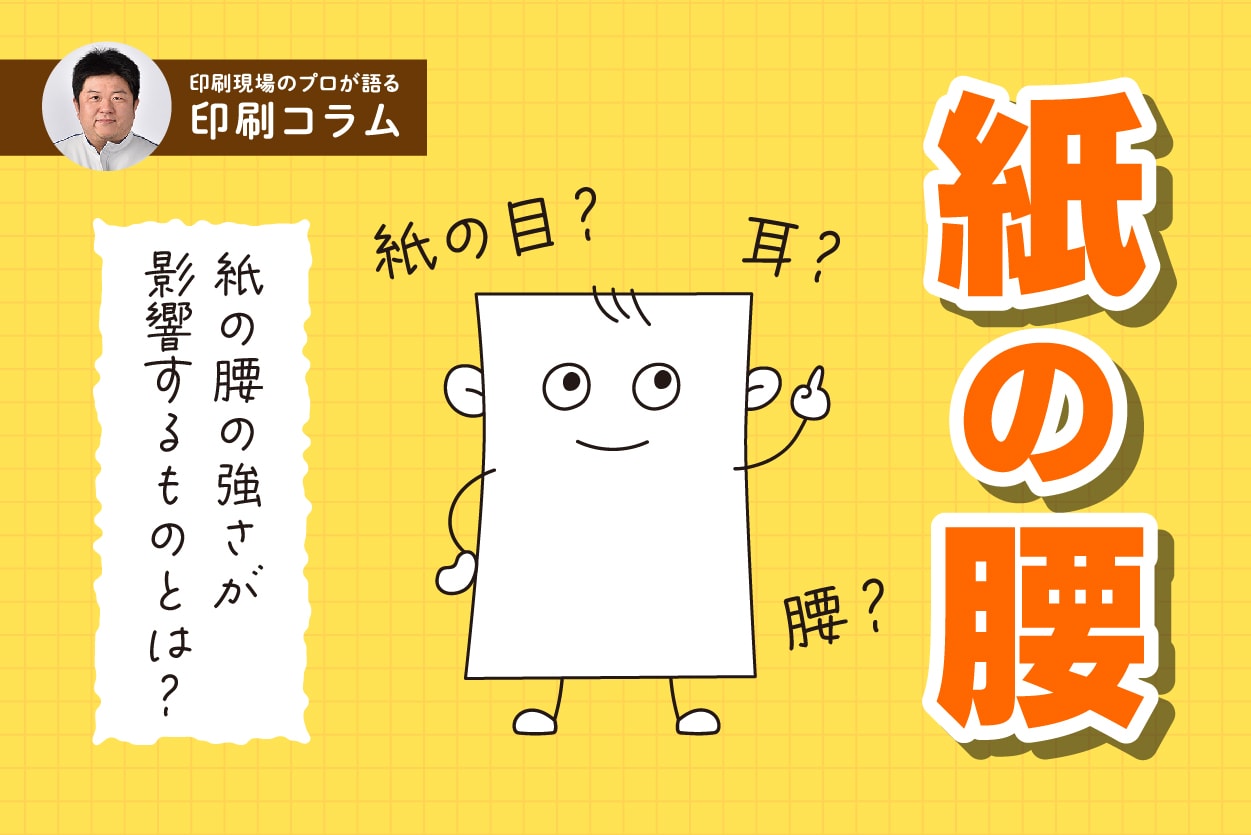
Is it correct that the Chinese character for paper stiffness is koshi? I was asked this question.
I try to write "koshi of paper" because it can be taken as "leftover paper" or "used paper" (sometimes it is left as "koshi of paper" due to conversion).
The expression "koshi (waist)" has the same meaning as that used for "udon. It is used in the sense of stickiness or elasticity.
Incidentally, there are many expressions that use body parts, such as "paper ear" as in "bread ear" or "paper eye" used as in "tide" or "wood grain".
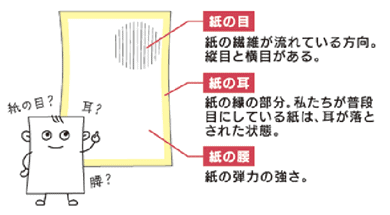
Now, the waist of paper is very important because the type, density, orientation, and length of the pulp fibers affect the resilience and flexibility of the paper when it bends. On the other hand, paper with a weak back will bend easily under gravity, and once bent, it will not return.
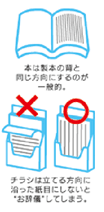
And the waist of the paper is affected by the grain of the paper, which is not of the same strength horizontally or vertically, because some papers have a vertical grain and some have a horizontal grain; a book, for example, is made with a grain that makes it difficult for the opened page to return and prevents the page from sagging.
It is also important to consider the waist of the paper for packages, labels, flyers, etc. In the case of packages, a strong waist protects the contents, but too strong a waist can cause the package to move back too far, making it difficult to work with. If you don't have a strong back, you will end up bowing the flyer.
Without a good backbone, neither people nor paper products can work adequately.