






Sanpo-yoshi Communication
Sanpo-yoshi Communication
President's Column] Low Pension Era
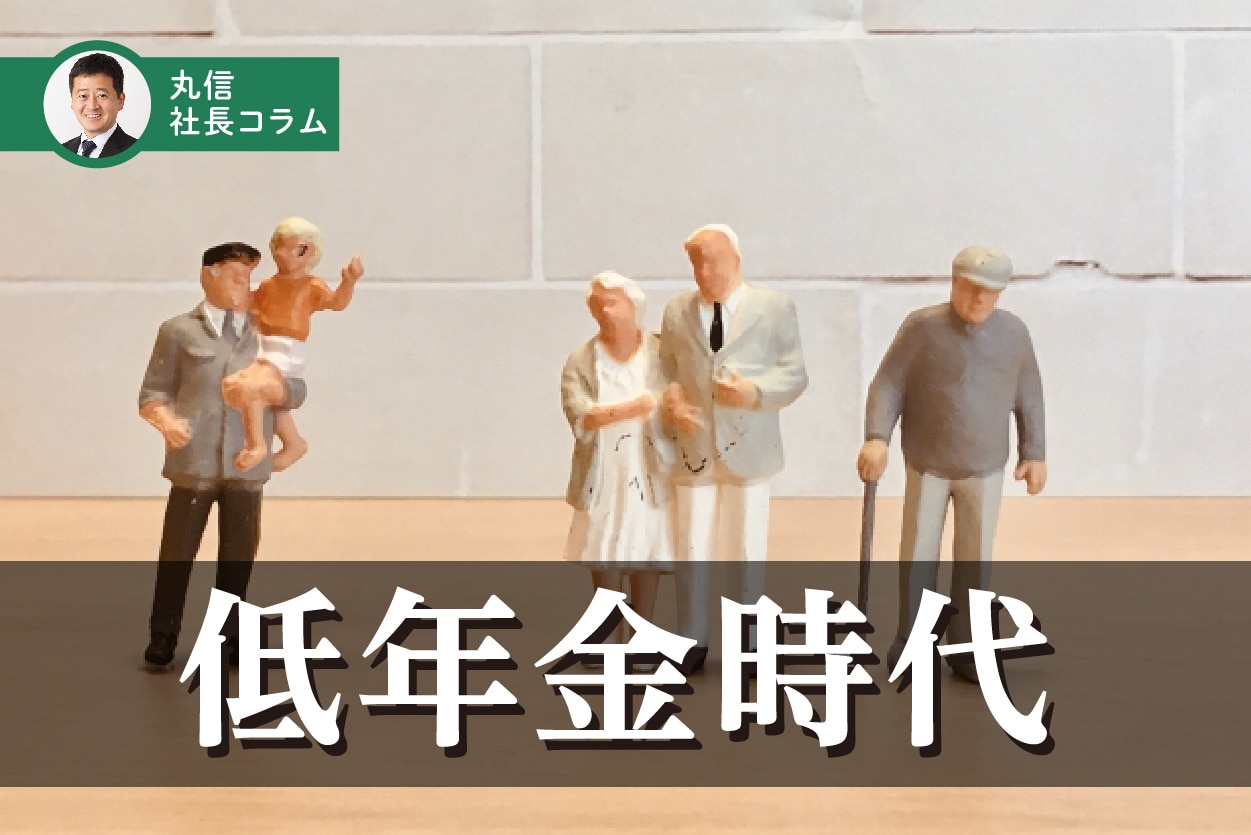
I recently read a feature article in Nikkei Business titled "Low Pension Survival.
It is inevitable that pension finances will become tighter due to the declining birthrate and aging population, and the system will be revised sequentially from April 2022 onward. In a nutshell, the system will be changed to one that encourages people to work longer and start receiving benefits as late as possible.
The pension system has three floors: the first floor is the national pension (average benefit of 56,000 yen), the second floor is the employee pension (average benefit of 146,000 yen) for company employees and civil servants, and the third floor is the private pension, which includes the defined contribution (DC) pension, individual iDeCo, and private insurance companies' pension insurance.
The so-called "20 million yen for old age problem" that the Financial Services Agency (FSA) outlined in 2007 and the "100-year life expectancy era" that has suddenly become the talk of the town (the current average life expectancy is 81 years for men and 86 years for women) have probably never caused more anxiety and reduced consumption among the public.
It is rare for small and medium-sized companies to have a retirement benefit of 20 million even if they join the Chushutsu Kyokai. Although some may argue that companies do not need to compensate or worry about their employees' retirement, if there is a concern about the retirement of long-serving employees, it would be effective to simply provide information and education to prevent such a situation from occurring.
Our company introduced a defined contribution (DC) pension plan 10 years ago to encourage employees to voluntarily build up their future pensions. (We have been encouraging our employees to voluntarily build up a pension plan for the future (we partially subsidize it) because we knew it was more advantageous than a private insurance company's annuity policy, which cannot be cancelled before age 60, what happens if you retire? (There are ways to do this) and other uncertainties, so enrollment is still limited.
iDeCo, an individual defined contribution pension plan, is now available to everyone without having to set up a company plan. The biggest advantage of a defined contribution pension plan is that the entire premium is deductible for income tax purposes. (Private insurance companies offer annuities of up to ¥40,000.) Despite such advantages, iDeCo is not yet widely used.
One of our executives, who turned 60 last year, is now of age to receive a defined contribution pension plan, and he is very happy about it. We will continue to educate younger employees.