





Sanpo-yoshi Communication
Sanpo-yoshi Communication
President's Column] Double Pricing for Inbound
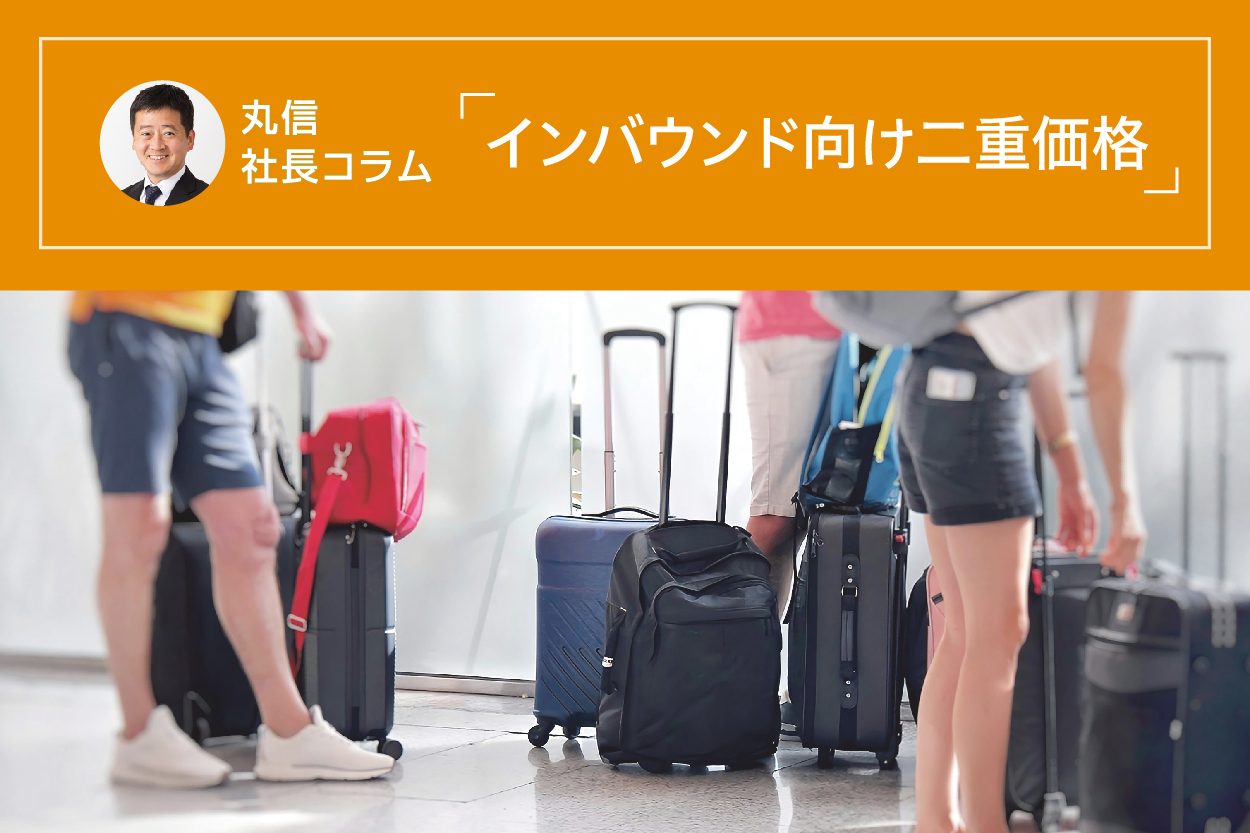
Last October, the JR Group raised the price of the “Japan Rail Pass,” which it sells to foreign visitors to Japan, by about 1.7 times.
The Japan Rail Pass is a pass jointly sold by the six companies of the JR Group for international visitors to Japan, and it’s ideal for traveling throughout Japan by train. There are two types—one for Green Cars and one for standard cars—each available in 7-day, 14-day, and 21-day options. That said, since the pass was originally so inexpensive, from the perspective of Japanese people who struggle with crowded stations and Shinkansen trains, I can’t help but think they could raise the price even more.
Perhaps reflecting these Japanese sentiments against overtourism, there appears to be an increasing number of cases at popular tourist destinations where prices and expensive special services are being offered specifically to foreign visitors to Japan.
The course menu for international visitors at “Yokohama Nadaman” includes Nanzen-ji-style steamed hairy crab, whole Ise lobster sashimi, teppanyaki Hida beef and abalone, sushi, and Shizuoka-grown muskmelon, all for 65,000 yen per person (private room). This is about twice the price of the most expensive course previously offered to Japanese customers. Even so, it’s reportedly quite popular. At the Tsukiji Outer Market, sea urchin bowls are sold for 22,000 yen, and seafood bowls in the 20,000-yen range are also available—and they’re still selling quite well.
While the unprecedented boom in inbound tourism is driven by the historically weak yen, overtourism is becoming a growing problem in popular tourist destinations such as Kyoto.
Even for those of us living in rural areas, we’re finding ourselves in situations more and more often where the cost of lodging during business trips is skyrocketing, which is a real problem.
A dual-pricing system—in which prices and fees are set higher for foreign visitors, allowing shops and hotels to maintain increased revenue and profits or contribute to the maintenance of local infrastructure, while simultaneously curbing demand from foreign visitors, and offering services to Japanese customers at the usual prices—could help address the issue of overtourism. Although there are still few examples of dual pricing in Kyushu, now may be a good time to consider it.
Yoji Hiraki