







Sanpo-yoshi Communication
Sanpo-yoshi Communication
President's Column] Raising Wages
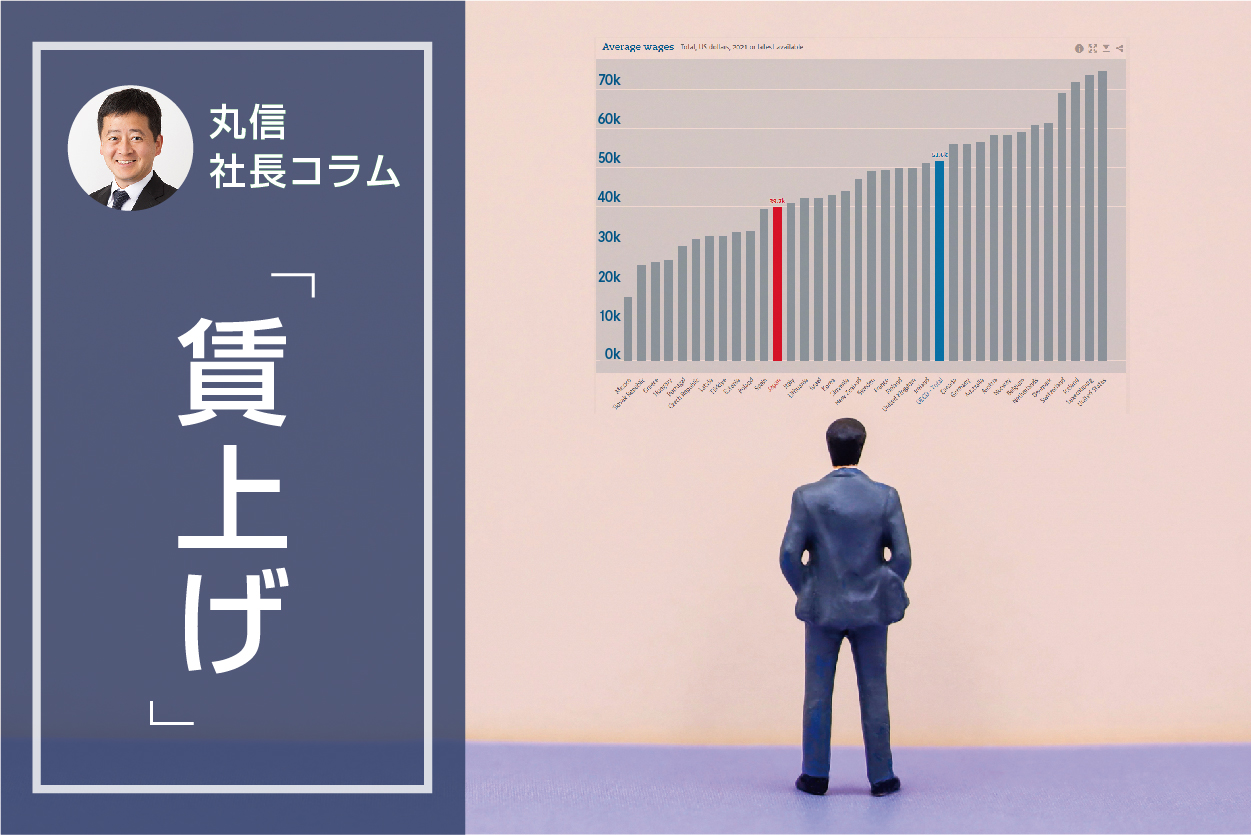
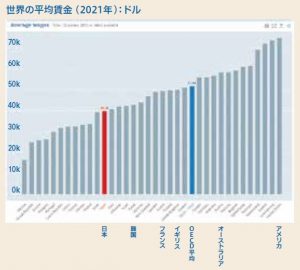
Since the beginning of the year, momentum for wage increases has been building, especially among large companies. Uniqlo, Suntory, and others have announced large wage increases. Sadly, Japan is the only major country where wages have not increased in the past 30 years, and it now ranks among the lowest in the G7 and well below the average in the OECD countries.
This has been attributed to deflation. (This is based on the dollar, so there is also the effect of the yen's depreciation.) Prices rose sharply last year all over the world. In Japan, it is still moderate, in the 3% range. Still, this is an inflation that has not been seen in the past 30 years. Looking at the breakdown, prices for business-to-business transactions have risen steadily, while prices for consumers are still quite subdued. Some believe that this is due to the growing proportion of pensioners among consumers. Consumer spending accounts for about 60% of GDP. The "baby boomers" who have been the driving force behind consumer spending will finally reach the age of 75 or older, which means that they will be elderly in the latter half of their lives. This is the reason why it has been predicted that the economy will deteriorate further from 2025.
However, not wanting to let this inflationary opportunity pass them by, the government is pushing companies to raise wages in every way possible. The same measures as in the past will be used to raise minimum wages and increase the adoption rate of tax and subsidy programs.
The economy should be buoyed if the cycle of wage increases, inflation within an appropriate range, improved corporate performance, and further wage increases begins to turn. The biggest key to this will be the ability of each company to increase profitability. If the productivity of not only the sales and manufacturing sites but also the indirect departments is not increased through DX, etc., there will be no source of funds for salary increases for employees. Our company is still struggling to raise productivity. However, if we raise wages only after productivity increases, there will be an increase in the number of employees leaving the company, and we will have a hard time recruiting new employees, which will have a strong negative impact. We feel that we have no choice but to take the following order: first, grit our teeth and raise wages, and then, with the cooperation of our employees, raise productivity.
There will continue to be a smaller number of young people in the labor market. We will have to compete with large corporations and government agencies to hire them. Moreover, the concentration of labor in Tokyo is only going to accelerate, so the situation in the rural areas is certain to become even more serious.
If we view wage increases as cost increases, we will never be able to move forward. I feel that the time has come when we cannot survive unless we consider wage increases as one of the objectives of management. It may be necessary to raise wages by at least 3%, which is equivalent to inflation. Easier said than done. In addition to the structural problem of a declining population, wars are occurring, and the future is uncertain, I think this is a very courageous management decision.