




Sanpo-yoshi Communication
Sanpo-yoshi Communication
President's Column] Invoice System
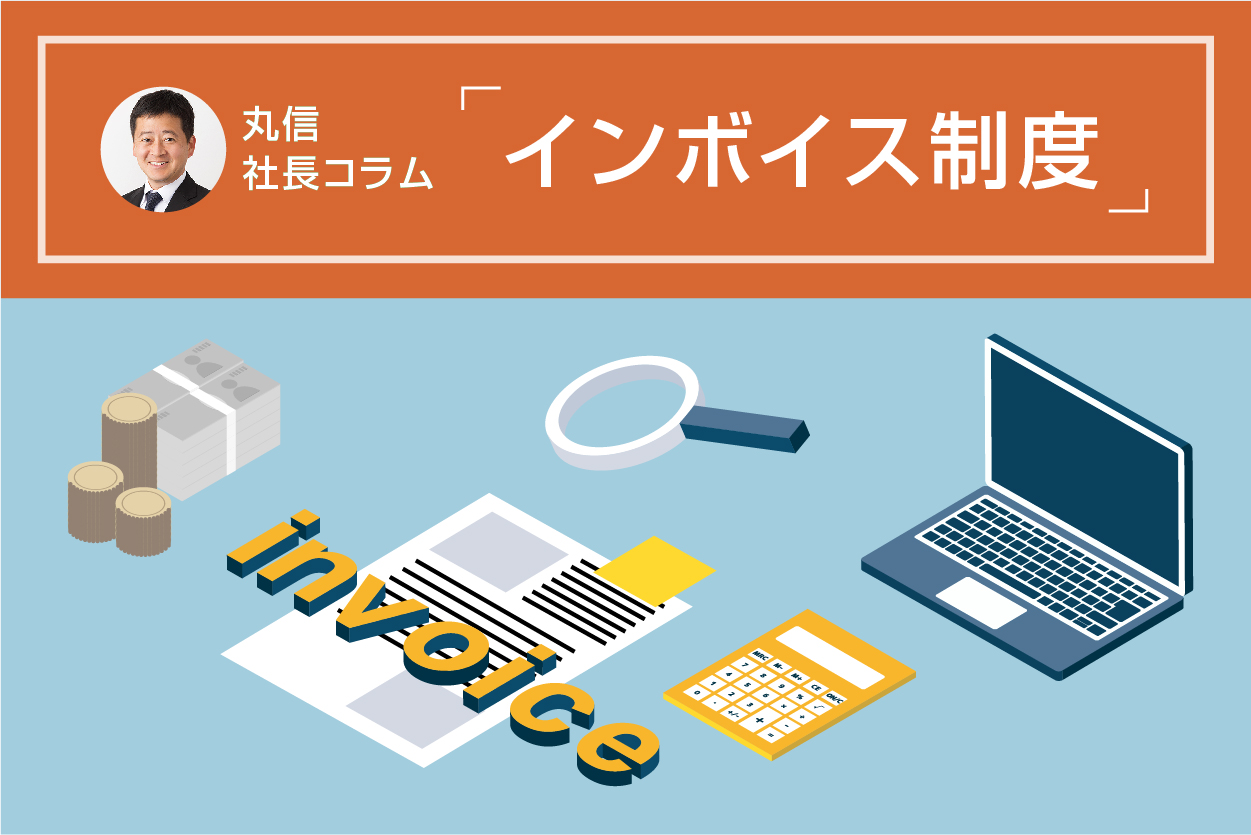
The invoice system will start in October, and as of the end of December 2022, the registration rate for corporations appears to be over 80%. On the other hand, the registration rate for sole proprietorships remains low at less than 30%.
Normally, a corporation pays consumption tax on sales minus consumption tax on purchases (and expenses). Therefore, a corporation neither loses nor gains from consumption tax.
However, this October amendment requires caution. We, general companies, can register for invoice and if the registration number, consumption tax rate, and tax amount are shown on the invoice, it is a qualified invoice. Our clients will have almost no problem to introduce the system, and we assume that most of them have already completed their preparations.
However, if suppliers, subcontractors, or expense payers (e.g., restaurants) do not register with the invoice system and remain tax-exempt businesses, consumption taxes paid to those exempt businesses cannot be deducted as consumption taxes on purchases when paying taxes.
However, as a transitional measure, 80% of the consumption tax can be deducted for the three-year period from October 1, 2005 to September 30, 2026, and 50% can be deducted for the period from October 1, 2026 to September 30, 2029. Even so, a certain amount of consumption tax will no longer be deductible. We will be responsible for that portion.
After October 1, it will be necessary to confirm at the time of reservation whether the restaurant to be used for a dinner party is invoice-compliant. Large chain restaurants and other restaurants with a large scale of management are expected to comply immediately, but small-scale restaurants and those with elderly managers may not have been compliant for a long time. I think it is necessary to let employees know about this.
It seems that the purpose of introducing the system is to capture the fact that we choose stores and sole proprietorships based on the fact that there is no sales tax deduction (after the 6-year transitional period), etc., and that this will put pressure on many restaurants and other businesses to register for invoicing in a few years, so that they cannot evade taxation.
In our case, some of the work (design, etc.) is being handled by sole proprietors, and we are currently checking invoice registration and asking those who have not yet done so to do so.
The Fair Trade Commission has ruled in this case that tax-exempt businesses may negotiate prices as long as the prices are not grossly unfair due to non-registration of invoices. What do we mean by "not grossly unfair"?
Because 80% is deductible for the first three years due to transitional measures,
10% x (1-0.8) = 2
A request for a price reduction of about 2% for the first three years would be considered OK. If it exceeds this level, it is considered unreasonable.
In addition, if the transaction can be stopped, but a large price reduction is demanded due to non-compliance with the invoice, it is considered an abuse of a superior bargaining position. Returning goods because of non-compliance with invoices also constitutes abuse of a superior bargaining position.
Although this is a major revision, we would like to keep the above points in mind and make sure that they are addressed.