




Sanpo-yoshi Communication
Sanpo-yoshi Communication
Which is easier to read?
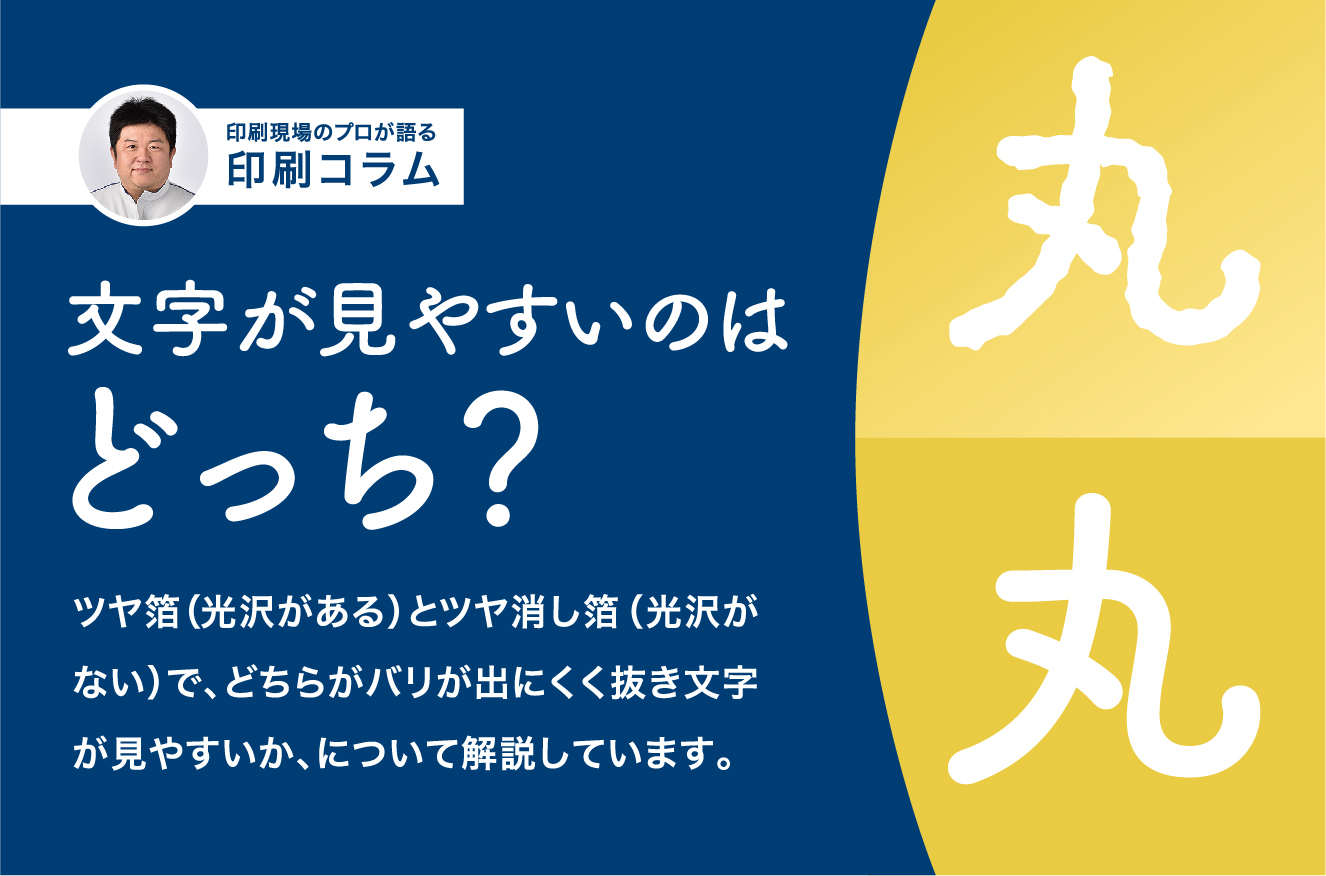
There are two types of foil: glossy foil (with a shine) and matte foil (without a shine). The other day, there was a discussion about which type is less likely to produce burrs and makes the cut-out text easier to see.
Q. What is Bali?
The adhesive on the back of the foil (hot stamp) is melted by heat to bond it to paper or other materials, but the torn remnants left behind when the foil is peeled off the foil film are called "burrs." Since these are the remains of the tear, they leave a jagged edge along the foil's outline. Naturally, the fewer burrs there are, the neater the finish looks.
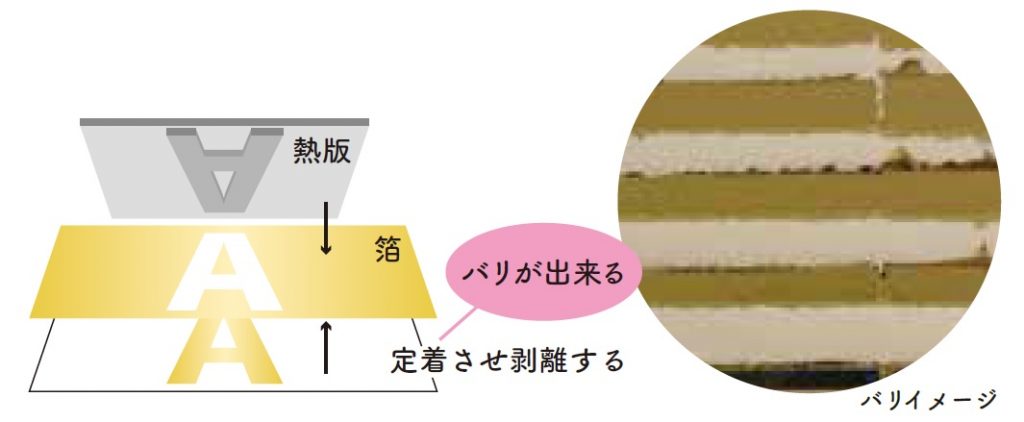
-
Foil manufacturer: “Matte foil is less likely to leave burrs” (based on experience)
-
Mr. A, a foil manufacturer: “I don’t think it makes a difference. If anything, matte foil is more prone to burrs.”
-
Mr. B, a foil manufacturer: “Matte foil is more prone to leaving burrs” (because the foil is softer).
* To minimize burrs, hard foil is often used.
Since opinions were completely divided, we conducted a test. Using the same foil stamping plate, we swapped out only the films—one matte gold foil and one glossy foil—and actually tried foil stamping them onto paper. Since burrs increase with pressure and heat, we intentionally applied insufficient pressure to create a smudged effect for the comparison.
As it turned out, just as the foil operator had said, the matte foil produced thicker, cleaner cut-out letters. When I asked the foil specialist why this was the case, they replied, “I don’t know why, but that’s just how it is.” So, I decided to investigate further.
First, I checked the condition of the burrs using a 50x magnifying glass. As for the glossy foil, since I had applied less pressure, there were no burrs and it looked good.
Next, when I examine the matte foil, not only are there no burrs, but it also appears as though the foil is positioned slightly inside the lines of the foil plate.
Q. Why?
I figured this probably works on the same principle as those laminated bags that you can tear open from anywhere.
One way to eliminate gloss is to remove the surface smoothness. Gloss is eliminated by creating irregularities on the surface or by mixing in coarse particles to cause diffuse reflection and scatter the light. These irregularities and particles act as break points, making it easier to tear the foil. Additionally, if the foil extends beyond the foil plate, it may, in some cases, be cut along the edges of the fixed wire sections.
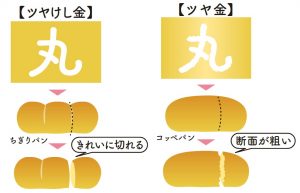
I explained, “Glossy foil has no seams, just like a koppepan roll, so even if you try to split it in half, it won’t tear cleanly. Matte foil, on the other hand, has texture and grain patterns that serve as natural seams, so you can tear it cleanly, just like a tear-and-share roll.” Also, while conducting this test, I discovered that when checking for foil coverage, applying matte PP to the front makes it easier to see the condition of the foil. This is because eliminating the texture created by foil stamping and the foil’s reflection makes the foil easier to see.
This testing process led to many new discoveries. I’d like to thank the customer who made this possible, as well as the foil manufacturers and foil applicators who cooperated with us.