





Sanpo-yoshi Communication
Sanpo-yoshi Communication
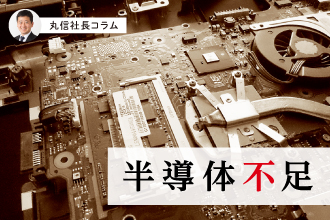
President's Column] Semiconductor Shortage
The other day, a seal printer manufacturer from Osaka came to our office and said, "Due to the shortage of semiconductors, even if you order a machine now, it will take more than six months to deliver it.
He told us, "There have been instances where printing presses have broken down and cannot be repaired for a long period of time due to a lack of parts."
I remember reading in the newspaper that automakers are cutting production due to a shortage of semiconductors, but I had no idea that my business would be affected...why is there a shortage?
To begin with, the demand for semiconductors had been increasing even before the corona, and then the pandemic broke out, followed by the temporary closure of factories. On the other hand, demand for PCs, tablets, etc. increased dramatically due to remote support. Simply put, this seems to be the main cause.
In addition to this, a fire at a Renesas plant in Japan (Ibaraki Prefecture) has reduced production capacity, which has spurred a shortage of semiconductors, especially for automobiles. Other compounding factors include deteriorating relations between China and Taiwan.
It is said that it takes about one trillion yen and one to one and a half years of preparation to set up a new semiconductor manufacturing plant, so it is not easy to increase production.
Since countries around the world have recognized the risk of semiconductors, it is expected that production bases unevenly distributed in Asia will be decentralized, but it is believed that it may still take three months to a year to bring the situation under control.
If you are planning to invest in new or capital equipment, or if the electrical system of your main manufacturing facility breaks down on a regular basis, you should consult with the manufacturer as soon as possible and check the availability of key components.
When a grant is finally approved and a machine is to be purchased, it is possible that delivery will not be made on time, or that the main manufacturing equipment will break down and be out of operation for an extended period of time.